skip to content

Clinical Neurosciences

 
Read more at: Cutting-edge baby brain scan technology is world first
•	The tiny brain imaging cap with some of the associated technology behind.

Cutting-edge baby brain scan technology is world first

7 November 2025

A team effort to develop the world’s first cot-side functional neuroimaging technology to speedily detect brain injuries including cerebral palsy in newborn babies is being spearheaded in Cambridge. The three-year Fast UltraSound Imaging with Optics in the Newborn (fUSiON) study, involving high-risk infants, is due to...


Read more at: Ultra-high-field brain scans reveal brain chemistry of severe Covid-19 survivors

Ultra-high-field brain scans reveal brain chemistry of severe Covid-19 survivors

6 November 2025

A study led by the University of Cambridge Department of Clinical Neurosciences has shown that ultra-high field MRI scans can measure brain metabolites in COVID-19 patients. The study revealed higher levels of an inflammation marker called myo-inositol in patients who reported poorer mental health after a COVID-19...


Read more at: Standardised brain scans improve tracking of inflammation for neurodegenerative conditions

Standardised brain scans improve tracking of inflammation for neurodegenerative conditions

6 November 2025

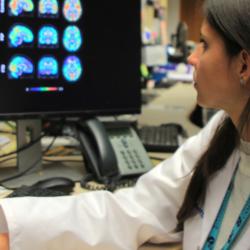
In a new study, UK DRI Emerging Leader Dr Maura Malpetti and Harry Crook (UK DRI at Cambridge) developed a method of standardising brain imaging results for PSP and Alzheimer’s. The research, published in the European Journal of Nuclear Medicine and Molecular Imaging , paves the way for larger studies and more accurate...


Read more at: Dementia linked to problems with brain’s waste clearance system

Dementia linked to problems with brain’s waste clearance system

23 October 2025

Problems with the brain’s waste clearance system could underlie many cases of dementia and help explain why poor sleep patterns and cardiovascular risk factors such as high blood pressure increase the risk of dementia. A study led by researchers at the University of Cambridge found that impaired movement of cerebrospinal...


Read more at: ‘Disease in a dish’ study of progressive MS finds critical role for unusual type of brain cell

‘Disease in a dish’ study of progressive MS finds critical role for unusual type of brain cell

10 October 2025

Scientists have identified an unusual type of brain cell that may play a vital role in progressive multiple sclerosis (MS), likely contributing to the persistent inflammation characteristic of the disease. Read the full paper on Neuron: Integrated omics reveals disease-associated radial glia-like cells with epigenetically...


Read more at: Common diabetes drug and antihistamine could together repair MS damage

Common diabetes drug and antihistamine could together repair MS damage

26 September 2025

Early findings suggest a combination of metformin, a diabetes drug, and clemastine, an antihistamine, can help repair myelin – the protective coating around nerves, which gets damaged in multiple sclerosis (MS) causing symptoms like fatigue, pain, spasms and problems with walking. Funded by the MS Society and carried out...


Read more at: “promising news” but “early days” – Cambridge researchers respond to new Huntington’s gene therapy trial

“promising news” but “early days” – Cambridge researchers respond to new Huntington’s gene therapy trial

26 September 2025

On the 24 th of September 2025 a major breakthrough for Huntington’s disease was announced by a research team at UCL: a new gene therapy delivered directly to the brain that slowed disease progression by a reported 75%. But what does this mean for clinicians and patients? And what are the challenges for bringing promising...


Read more at: Maura Malpetti wins 2025 young European Researcher Award for Alzheimer’s research
Dr Maura Malpetti credit Cambridge University

Maura Malpetti wins 2025 young European Researcher Award for Alzheimer’s research

25 September 2025

Dr Maura Malpetti has won the 2025 European Young Researcher Award from the Fondation Recherche Alzheimer in France. This leading French foundation supports the advancement of research in Alzheimer's disease and related syndromes in France and beyond. To support this work, it founded its European grand prize awards...


Read more at: Raising awareness on Brain Injury in Cambridge

Raising awareness on Brain Injury in Cambridge

9 September 2025

This year, researchers at the Department of Clinical Neurosciences are raising awareness in Cambridge on traumatic brain injury research and safety in partnership with the Cambridge City Mayor. The campaign highlights the work of Professor Peter Hutchinson and his team. Peter is a specialist neurosurgeon and director of...


Read more at: Cambridge to host cutting-edge total-body PET scanner as part of nationwide imaging platform
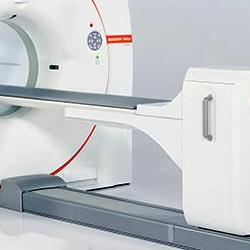
Siemens Healthineers Biograph Vision Quadra Total-Body PET Scanner. Credit: Siemens Healthineers

Cambridge to host cutting-edge total-body PET scanner as part of nationwide imaging platform

2 September 2025

A new total-body PET scanner to be hosted in Cambridge – one of only a handful in the country – will transform our ability to diagnose and treat a range of conditions in patients and to carry out cutting-edge research and drug development. The scanner, funded through a £5.5m investment from the UKRI Medical Research...